










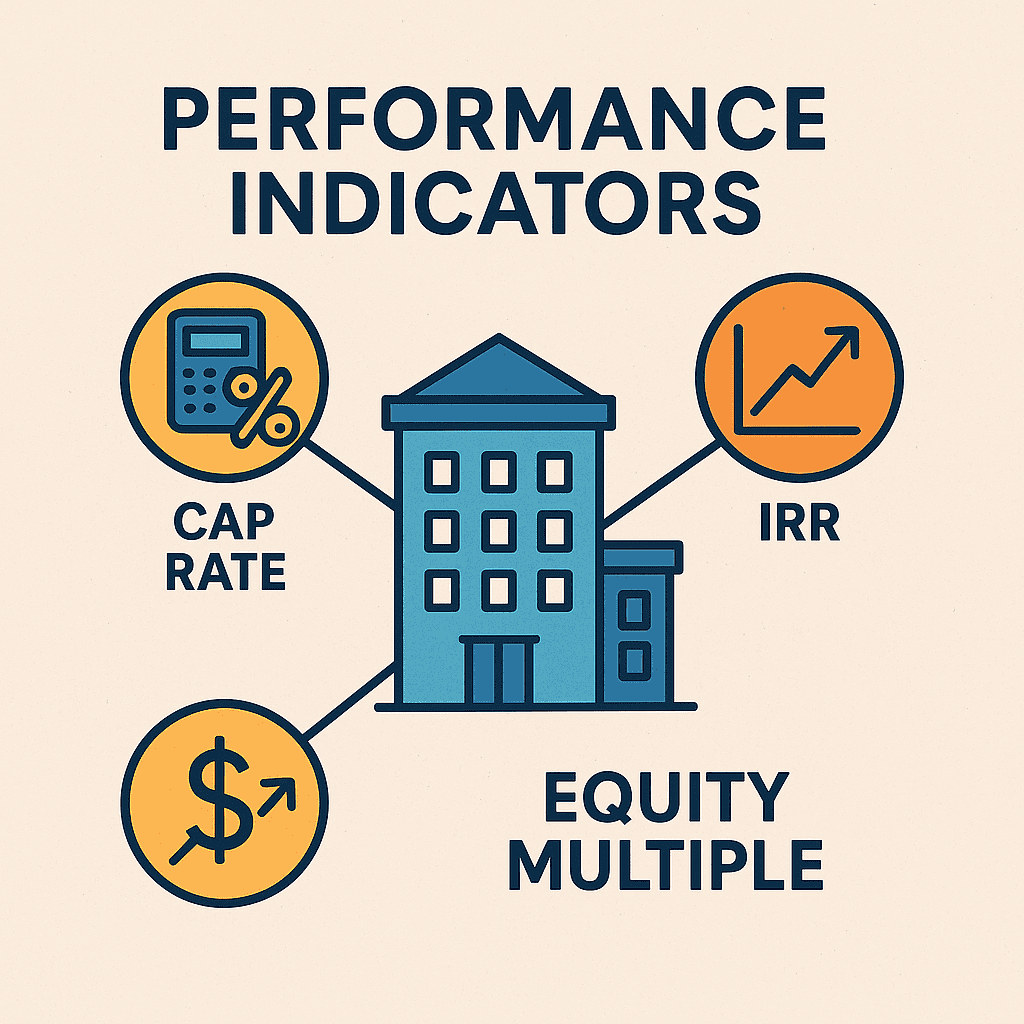
Cap Rate vs IRR vs Equity Multiple: What Do They Actually Mean?
By James Riel, Principal Broker-Owner, JR Associates
If you've ever dipped a toe into real estate investing, you've probably heard terms like cap rate, IRR, and equity multiple tossed around like everyone’s supposed to know what they mean. But the truth is, even experienced investors sometimes mix these up—or worse, misuse them.
Let’s fix that.
Whether you're sizing up a new deal or just want to better understand how your rental property is performing, here's a plain-English breakdown of these three key metrics—and when to use each one.
1. Cap Rate: The Snapshot
Cap Rate = Net Operating Income (NOI) ÷ Purchase Price
Cap rate tells you what kind of return a property might generate if you paid cash for it, with no mortgage.
It’s the most common “quick and dirty” way to compare investment properties, and it’s often used like a thermometer to measure how “hot” or “cold” a market is.
Real-World Example:
Let’s say a 3-family brings in $90,000 per year in gross rent, and after expenses, you’re left with $60,000 in NOI. You buy the place for $1,000,000.
Cap Rate = $60,000 ÷ $1,000,000 = 6%
A 6% cap rate means you're getting a 6% return on your investment before debt.
✅ Use cap rate when comparing buildings, neighborhoods, or deciding if the asking price feels justified.
2. IRR (Internal Rate of Return): The Full Story
IRR measures the total return you earn over time, including things like:
-
Rental income
-
Appreciation
-
Refinance proceeds
-
Sale profits
...while also factoring in when you receive those returns (time value of money).
Think of IRR as the annualized return that equalizes all the ins and outs over the life of your investment.
Real-World Example:
Let’s say you buy a BRRRR deal for $745K, put in $148K down, renovate with a $450K loan, and refinance out at a $1.85M appraisal. You pull most of your cash back and keep the asset.
Over 5 years, you:
-
Collect $3,000/year in cash flow
-
Refi and pull out $200K
-
Sell the building for $2M at the end
Your IRR could end up in the high teens or low 20s—even if the yearly cash flow was modest—because you got most of your money back quickly and earned a profit on top.
✅ Use IRR to evaluate long-term performance and compare deals across different timelines.
3. Equity Multiple: The Straight-Up Return
Equity Multiple = Total Cash Returned ÷ Total Cash Invested
This one is as straightforward as it gets. It tells you how much money you made over the life of the deal, regardless of timing.
Example:
If you invested $100,000 and got back $200,000 (including all cash flow and sale/refi profits), your equity multiple is:
2.0x (you doubled your money)
✅ Use equity multiple when explaining a deal to investors who care more about total return than timing.
👀 So, Which One Matters Most?
All three have their place:
| Metric | Best For |
|---|---|
| Cap Rate | Quick property comparison, market analysis |
| IRR | Long-term, time-sensitive return modeling |
| Equity Multiple | Total cash return summary |
If you’re holding rentals long-term, cap rate helps you compare investments upfront, but IRR and equity multiple help you see the true return after holding, refinancing, or selling.
Final Thoughts (Especially for the BRRRR Crowd)
If you're using strategies like Buy, Rehab, Rent, Refinance, Repeat, don't let cap rate alone steer the ship. A low cap rate property might still yield a great IRR if you unlock equity fast or sell high.
And if you're building long-term wealth, equity multiple is a simple way to track your wins: “Did I double my money in 5 years—or just break even?”
Want help analyzing your next deal? At JR Associates, we specialize in helping both first-time and seasoned investors see the full picture—not just the surface-level numbers.
📩 Reach out anytime for a quick consult or to start exploring smart rental opportunities.

Connect